Newsroom


MMQB: Configura Software Maker

Configura HQ

If you want to work with Configura, an up-and-coming space planning software company based in Linkoping, Sweden, be prepared to jump into the business relationship with both feet. Configura wants to work with what it calls "doers," not those that wait around for business to come to them. In return for the close relationship, Configura promises a completely customized design system and a long-term partnership that goes far beyond most customer/client relationships. There are many space planning software systems available to office furniture makers and dealers, but Configura's is unique. But what makes the company truly different is the tight-knit relationships it forms with its growing list of customers both in Europe and North America.

Since the company was established in 1990, it has evolved and pushed forward its software based on the Parametric Graphical Configuration model. Simply put, the technology provides information concerning how the different parts and pieces (in our industry, office furniture) can be combined, what their relationship is to one another and which limitations exist. In addition, the PGC software automatically calculates and provides costs, specifications and other information necessary for production, assembly and ordering. And it does it in a way that is so easy and seamless that anyone can use it.

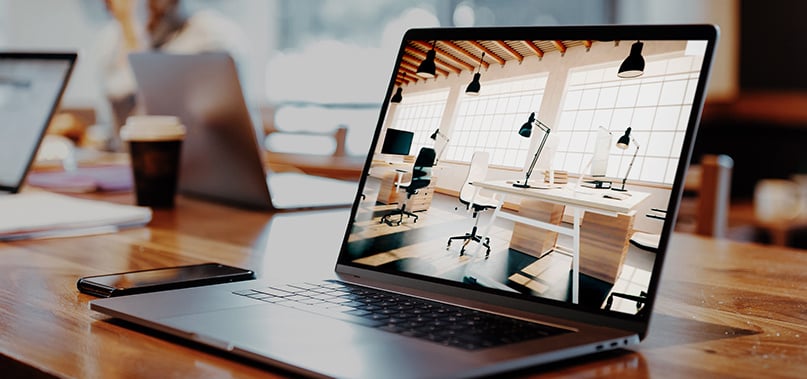
Imagine a dealer salesman at a customer's office. Instead of pulling out a sketch pad, he pulls out his laptop. Using the Configura software, the salesman draws in walls, desktops, task chairs, file cabinets. The Configura software is photo realistic, so the office space looks like it will when built out, complete with the proper fabrics and finishes. It looks slick and helps the salesman land the deal. But the power of the software is really behind the scenes. All documentation is created automatically and is continuously consistent and up-to-date. With the push of a button, the software can send the order to the manufacturer for production.

PGC is easy to use because it is so visual. Users pull graphic symbols into the space that actually look like the product they are specifying. A company might have thousands of items in its product range, but Configura software simplifies all of it.

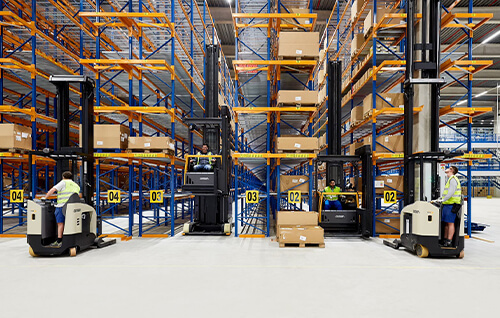
The Configura software has proven popular. The company has 8,000 licenses in use worldwide, more than 40 key customers in the office furniture, kitchen and bath, material handling and industrial machinery industries and sales of more than $9 million. Sales increased by $1.7 million in 2008. 2008 was an important year for Configura, as the company worked in close collaboration with Steelcase to launch the Extension Steelcase SmartTools powered by Configura's CET Designer tool.

The company has many customers in Europe, including Kinnarps, Martela, Electrolux and FlexLink. The company is building a major stable of customers in the North American market as well. In addition to Steelcase, Configura counts Teknion, Burroughs, TAB and Haworth as customers. Configura's plans for growth are interesting: It certainly welcomes as many customers as possible, but they must be the right fit. Some companies are looking for a software company that will deliver a product to them and end the relationship. Configura is looking for long-term collaboration, said Chief Executive Officer Johan Lyreborn.

"When we started working with Haworth, we told them that this is a journey," he said. "There are so many more things that we want to do. We don't just give them a product and say, 'There you go. Good luck with that.' Configura wants to continue to make its products better. To do that, we need to have a customer that is willing to work with us to make it happen."

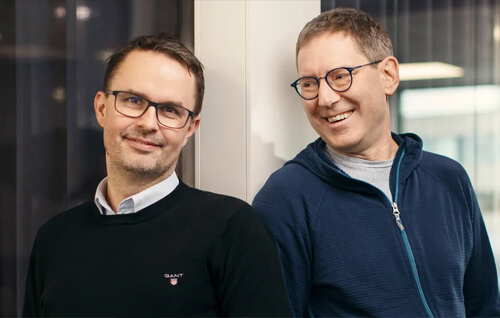
Like many software companies, Configura was launched to help solve a problem. It was the early 1990s and Sune Rydqvist had a problem with his architectural wall business. It was difficult to plan space and there were no tools that made it easy to do it. So he turned to his son, Goran Rydqvist and his family friend, Johan Lyreborn. The younger Rydqvist and Lyreborn had grown up together. The two families have cottages on lake Vattern and Johan and Goran spent years together exploring the idyllic water and landscape. As children, they formed their first business together called Money Inc. The two budding entrepreneurs made money by picking wild blueberries and mowing the grass for their families and neighbors.

Johan and Goran later attended Linkoping University of Technology where they studied computer science and engineering. While they were both at the university, they decided to come up with a computer program that would solve the space planning problems Sune Rydqvist's company was having. The early version of the Configura software called Office Maker was born (Configura continues to be the name of a software product and the name of the company).

"Goran and I were both computer science students," Lyreborn said. "We started to use AutoCAD and found it hard to use. Our objective was to create a software program that was easy enough for Sune to use. Sune's company, S-Line Office, was the first to use the software in February 1991. "At the time, there was nothing like it out there," Lyreborn said. "It was designed so anyone could use it."

The first sale was to Goran Rydqvist's father. The second sale would be harder to land. The technology was far ahead of its time and it proved to be over the head of most manufacturers in the early 1990s. Lundqvist, an archival shelving company was the second software company. A major shelving project in Stockholm sold Lundqvist on the product. A quote that would have taken the company five days to compile was done in less than a day by one person.

It was a time of great promise and incredible changes in the computing world, said Goran Rydqvist, who continues to program everyday while holding the position of vice president of research and development. He was inspired by the Apple Macintosh Classic. "It was such a revolution for a user interface," Goran Rydqvist said.

The first big break for Configura came in 1994 when it signed Martela, Finland's largest office furniture maker. The company also is a major player in all of Scandinavia and Russia. "That was a big, big break for us," Lyreborn said. "From 1990 to 1994, we knew we had a good product, but we weren't sure if the company would survive. At that time, people didn't know what our software was all about. We were stretching things. It was over their heads. There was other software at the time, but it wasn't PGC. We asked our customers: 'Do you want to solve the problem half way or fully?'"

Configura grew and prospered, so much so that Sune Rydqvist sold S-Line to focus his efforts on the software company full time. Sune Rydqvist now serves as chairman of the company. The company added key executive Johan Bengtsson, who acts as vice president of marketing and sales. Configura went on to sign some of the largest office furniture makers in Europe, including Kinnarps, the leading company in Scandinavia.

Configura operates out of an historic former school building in the heart of Linkoping, Sweden -- a two hour train ride south from Stockholm. While obviously an old building, it is well kept, painted in pastel colors (as are most buildings in the country) and thoroughly modern on the inside. Each floor is filled with programmers working out the details for the next generation product. It is a typical high tech office. The company offers its workers flexible hours and company-sponsored physical fitness programs. Many workers ride their bicycles to the office.

In 2002, the company dipped a toe in the North American market. It opened a small office in Grand Rapids. By 2005, Configura was fully invested in North America and established a larger office in Grand Rapids. Peter Brandinger was named vice president of business development and moved to West Michigan.

Since then, the company has worked to make its latest software product, Configura Extension Technology (CET) Designer, the industry standard for the office furniture, kitchen and bath, material handling and industrial machinery markets. One of the fundamental characteristics of CET Designer is the ability to simultaneously work with intelligent product catalogs from different suppliers and manufacturers. The software allows content, both the product-oriented and functional parts, to be dynamically extended in the CET Designer user application. Before PGC and related Extension technology, the design and configuration process was based on working with static and non-parametrical product models and separately, the related but unconnected product data like pricing and attributes.

Manufacturers like Configura software because it is customizable. In fact, Goran Rydqvist said the company is unique because its software is 100 percent customized to the customer. It allows the company to own its brand. "Manufacturers should be proud of the brand, not lock it into some stupid format," Lyreborn said.

The technology is successful because it makes office furniture easier to layout and sell. And it saves manufacturers and dealers money, he said. "The problem is that you have a customer and a manufacturer and there is so much stuff in between," Lyreborn said. "There are bills of materials, drawings, engineering, billing and delivery and everything is very fragmented into different departments. We are talking about solving this problem."

Configura is not standing still. The company is working on software that will handle very large drawings. During the second quarter of 2009, the company plans to release new versions of both Configura and CET Designer software that contain support for hardware-based graphics.

The company also is ready to release an integration between AutoDesk's Revit and Configura's CET Designer today (Sept. 28) at its user conference in Las Vegas. The integration will allow architects and other users to create families of objects (products) that can be imported into Revit, giving environments created in Revit a photo-realistic depiction of the furnished space using actual manufacturers' symbols.

Better graphics will continue to drive the Configura products forward, Goran Rydqvist said. Touch screen computers also will lead the way. Configura plans on expanding its reach as well. "We want to create software not just for a floor, but for the whole office building," Goran Rydqvist said.

Billions in sales go through Configura's products each year, but the company is not content to stand still. "A lot of people are talkers," Lyreborn said. "We want the doers to be our partners."

And for its part, Configura will continue to look at the future of computing and the office to develop its next generation of products. It will not rest on its laurels or be content with what it has, they say.

"It is the technical side of this company that keeps it alive," said Goran Rydqvist. "We continue to get requests for help from customers as the complexity of the rules keep on changing. Our software takes away that complexity. It is the computer that does it behind the scenes."

----------------------------------

by Rob Kirkbride

Published in The Monday Morning Quarterback on Monday September 28, 2009

Comments

Post new comment

The content of this field is kept private and will not be shown publicly.

Multimedia

Latest image from our Flickr gallery


 Watch our demo videos on YouTube