
Marketplace
See the full list of manufacturers who uses Configura's platform.



-1.svg)



The leading SaaS platform for space planning
You can be sure of our full commitment - from initial analysis, to implementation and end-user support.
hej
hej
Open for anyone: How you join is up to you
You can be sure of our full commitment - from initial analysis, to implementation and end-user support.
hej
hej

What's in it for me?
You can be sure of our full commitment - from initial analysis, to implementation and end-user support.
hej
hej

At Configura, development is central to everything we do. We are a technology company at heart, with most of our software development taking place in-house, close to the people and industries our tools are built for. Our developers work across a range of teams and focus areas, from platform and infrastructure to industry-specific solutions, customer-facing projects, and internal workflows, often in close collaboration with colleagues in Customer Success to ensure the software holds up in real-world use.
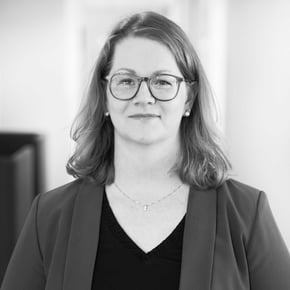
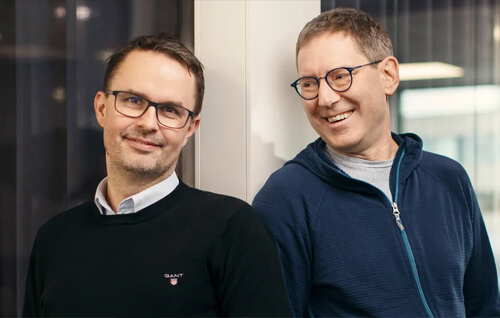
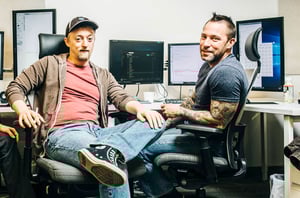
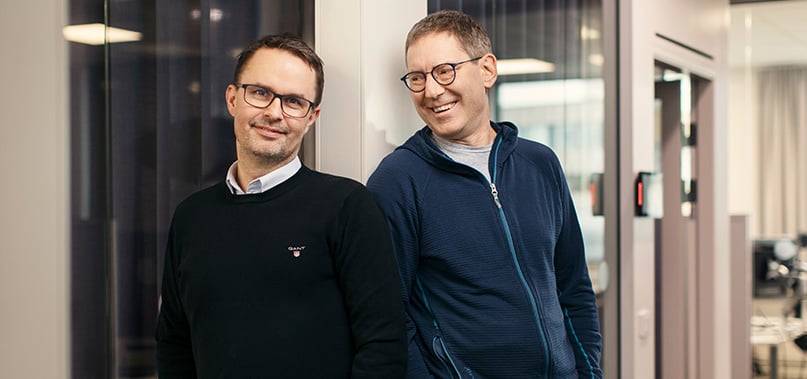
This article offers a glimpse into that work through a conversation with Chiou Hau Tee and Yi Xiong Wong, two of our developers in Kuala Lumpur, Malaysia, about building the systems behind professional design workflows.
When design tools work well, they tend to disappear. What remains is focus: on ideas, decisions, and outcomes. But behind that apparent ease sits a different kind of design work, one concerned with structure, logic, and long‑term reliability.
At Configura, developers work close to design even when their role is not design in the traditional sense. Chiou Hau Tee and Yi Xiong Wong both build the systems that designers, planners, and engineers rely on every day. Their work shapes what is possible, what is flexible, and what remains stable as projects grow in complexity.
We spoke with them about what they’ve been working on, how their roles have evolved, and what it takes to design software systems that hold up over time.
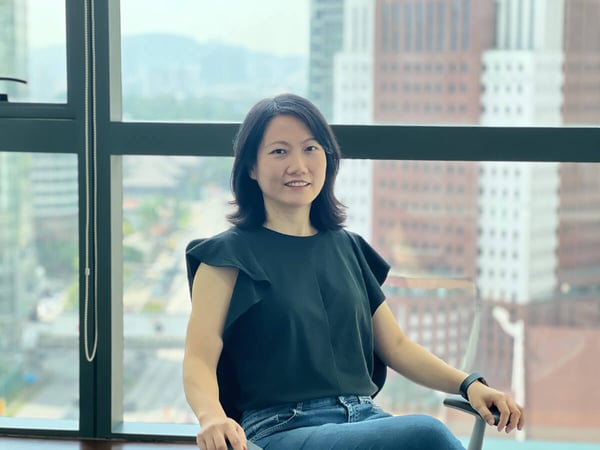
Chiou Hau Tee – Senior Developer, 14 years at Configura, inspired by parametric design.
Asked what they are most proud of from the past year, neither points to surface‑level functionality. Instead, both talk about removing friction and strengthening the core.
Yi Xiong:
I’m proudest of my work on improving our Stage development workflow. When I joined Team Fractals, running Stage for development or testing was extremely tedious and error‑prone. Now, developer and QA time is no longer wasted on debugging the setup, and we can focus on the real work.
Chiou Hau:
This year, I’m especially proud of adapting the Configura conveyor framework into a customer‑specific solution. Translating real‑world operational constraints into structured, scalable logic that customers can depend on is deeply rewarding.
What connects these experiences is a shared focus on durability. Instead of adding more, both describe progress as making systems clearer, more dependable, and easier to build on. In enterprise software, those improvements are often invisible, but they define everything that comes after.
Although Chiou Hau and Yi Xiong are developers by role, design considerations are part of their everyday decisions. Not in terms of visuals, but in how systems support people who use them.
Yi Xiong:
I’ve always had a focus on improving the developer experience at Configura. I see it as a force multiplier that allows us to ship higher‑quality code, faster.
Chiou Hau:
Rule‑driven automation and parametric intelligence continue to excite me. The more domain knowledge we encode into the platform, the more we empower users to design confidently and efficiently.
From this perspective, design becomes something embedded in structure. The better the underlying logic reflects real‑world rules, the more freedom users have at the surface. It’s a different layer of design, but one that directly shapes how tools are experienced.
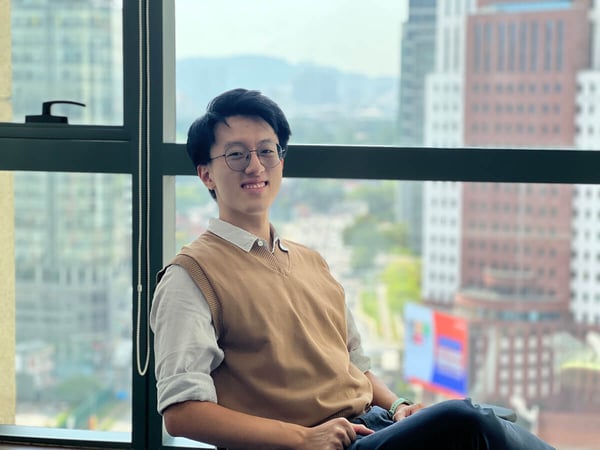
Yi Xiong Wong – Developer, 3 years at Configura, helping shape features like Inspector for CET.
As systems grow, complexity is inevitable. What matters is how consciously it’s handled.
Yi Xiong:
I’ve seen a stronger focus on minimizing downtime in our products. We now have alerts and dashboards that help us stay on top of things before problems occur.
Chiou Hau:
We’ve become more intentional about long‑term architecture and shared technical ownership. There’s greater focus on maintainability and scalability, and on thinking beyond the immediate feature. After many years in customer projects, I’ve seen how important those foundations are.
This shift reflects a broader mindset: treating software not as something finished at release, but as something that needs to evolve responsibly over time. Especially in configurable systems, today’s shortcuts often become tomorrow’s constraints.
When asked what kinds of challenges they enjoy most, both describe their work in spatial terms.
Yi Xiong:
I enjoy designing systems. It’s like a puzzle where you balance simplicity with future extensibility.
Chiou Hau:
Complex constraint solving across multiple systems. It’s like engineering a 3D puzzle where everything must fit, function, and follow real‑world rules.
These challenges mirror the environments Configura’s tools support. Warehouses, interiors, and industrial systems all demand precision while allowing variation. Building software for those contexts means learning to embrace complexity without letting it overwhelm the system.
Looking ahead, neither frames success as speed or novelty.
Yi Xiong:
It will come down to our ability to keep up with new technological advances, while being able to filter out the gems from the hype.
Chiou Hau:
Success will be defined by our ability to build adaptable, robust systems that scale with customer complexity while keeping our architecture clean and maintainable. The stronger the foundation, the more confidently we can innovate.
It’s a grounded definition of progress, rooted in judgment rather than momentum. One that reflects what it means to work with software that professionals rely on day after day.
For developers interested in working with long-term systems and real-world complexity, this mindset is central to what it means to work at Configura.
Explore more perspectives on AI, innovation, and professional design workflows on the Configura Blog.
This article is part of a broader set of reflections in the Configura Yearbook 2025, highlighting work across product development, innovation, community and leadership.

Subscribe to our Community Highlights blog for the latest Configura news, user insights, and updates on internal initiatives.